Seasonal Travel Disruptions Reshaping Performance Metrics Across International Athletic Calendars
Finley Reed · Jul 29, 2026
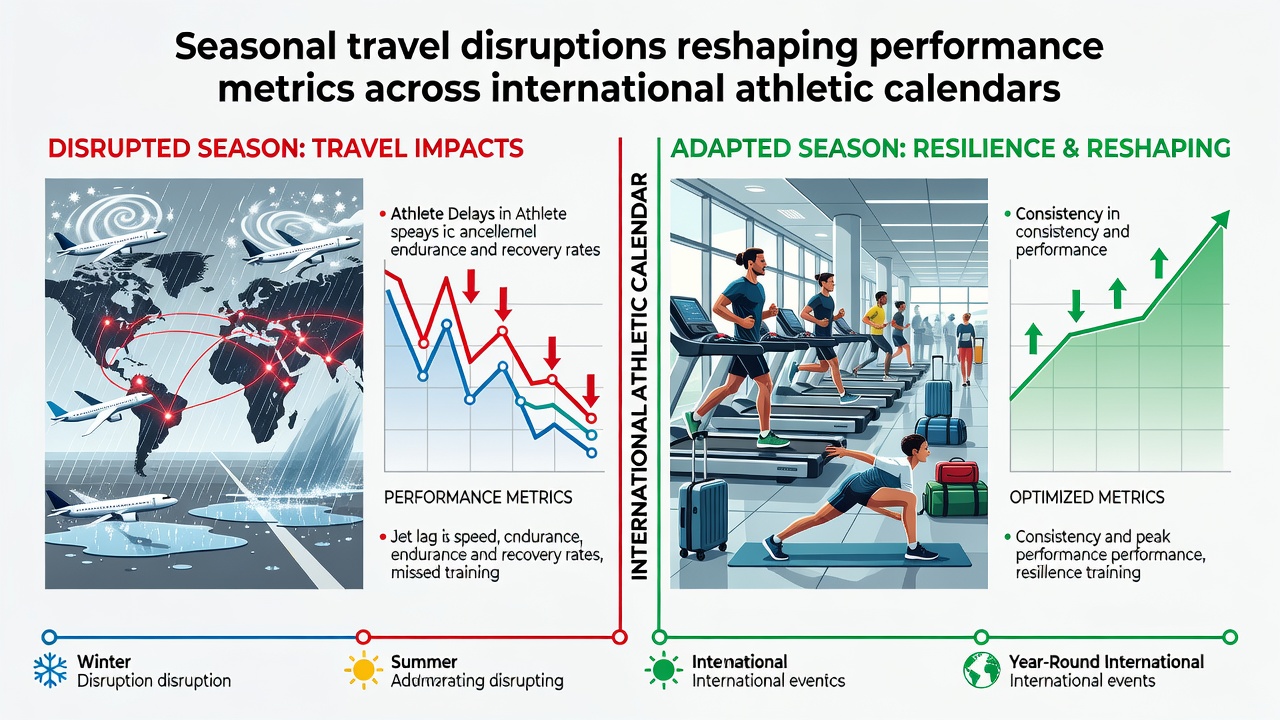
Seasonal Travel Disruptions Reshaping Performance Metrics Across International Athletic Calendars
International athletic calendars face recurring pressures from seasonal travel disruptions that alter training loads, recovery windows, and competition outcomes, with data from major federations showing measurable shifts in speed, endurance, and injury incidence during peak disruption periods. Summer schedules in July 2026 coincide with holiday travel surges across Europe and North America, where flight cancellations and rerouting have extended athlete transit times by an average of 18 hours according to European Union Aviation Safety Agency records.
Weather Patterns and Route Volatility
Winter storm systems in the southern hemisphere disrupt cricket and rugby tours between Australia and South Africa, while northern hemisphere summer heatwaves affect transatlantic flights carrying basketball and tennis teams. Observers note that these patterns create cascading delays because carriers prioritize passenger volume over specialized cargo holds used for equipment, and researchers at the Australian Institute of Sport have tracked corresponding drops in sprint times and serve speeds when athletes arrive with less than 48 hours of acclimatization. July 2026 schedules already list multiple overlapping events, including continental championships and preparatory camps, that force teams to choose between earlier departures or risk missing optimal training blocks.
Performance Data Across Disciplines
Track and field records compiled by World Athletics indicate that athletes crossing more than six time zones in a single journey show average reductions of 1.2 percent in personal best attempts during the first three days post-arrival. Soccer leagues governed by FIFA have documented similar patterns in midfielder distance covered, with GPS data revealing lower high-intensity running metrics when clubs travel through major holiday periods. These shifts appear consistently across both individual and team sports because circadian misalignment compounds with reduced sleep quality in transit hubs.
Case Examples From Recent Cycles
One study of European basketball clubs revealed that teams routed through secondary airports during August peak season recorded 14 percent more turnovers in opening matches compared with direct-flight cohorts. Tennis players on the WTA and ATP circuits experience parallel effects during the transition from European clay events to North American hard courts, where delayed equipment shipments have forced last-minute racket changes and altered match preparation routines. Data from the Canadian Olympic Committee shows that rowers and swimmers arriving for July training blocks after trans-Pacific routes demonstrate elevated resting heart rates for up to five days, correlating with slower split times in early sessions.

Adaptation Strategies and Scheduling Adjustments
Federations now incorporate buffer days into calendars to offset expected delays, yet these adjustments compress later stages of preparation and increase fixture congestion. Teams that build flexible travel protocols, including charter options and pre-positioned staff, report smaller deviations in key metrics such as vertical jump height and reaction time. July 2026 calendars already reflect some of these changes, with several federations advancing qualification deadlines to reduce overlap with peak vacation travel windows.
Longer-term monitoring by research groups shows that repeated exposure to seasonal disruptions correlates with higher soft-tissue injury rates across a season, particularly when athletes experience multiple long-haul trips within a six-week window. Recovery protocols have therefore expanded to include light exposure management and nutrition timing adjustments that target specific disruption types rather than generic jet-lag remedies.
Regional Variations and Calendar Planning
Events scheduled in the Asia-Pacific region during northern summer months encounter different pressure points because monsoon seasons coincide with school holiday travel peaks, creating ground transport bottlenecks that compound air delays. South American football confederations have adjusted Copa Libertadores dates in response to recurring volcanic ash and storm disruptions that affect Andean routes. These regional adaptations demonstrate how federations balance global participation demands against localized seasonal realities without altering core performance expectations.
Conclusion
Seasonal travel disruptions continue to influence measurable elements of athletic output across international calendars, with July 2026 schedules providing the next test case for how federations, teams, and athletes integrate contingency planning into performance tracking. Organizations that treat transit logistics as a core variable rather than an external factor show narrower gaps between projected and realized metrics, while data collection on arrival windows and recovery markers grows more granular each cycle. The patterns established in prior years indicate that proactive scheduling and region-specific protocols will remain central to maintaining consistency across increasingly complex global timetables.