Surface Synergies: Equine Footing and Tennis Court Types Affecting Scoring Patterns and Promotional Stacking
Logan Ludwig · Aug 19, 2026
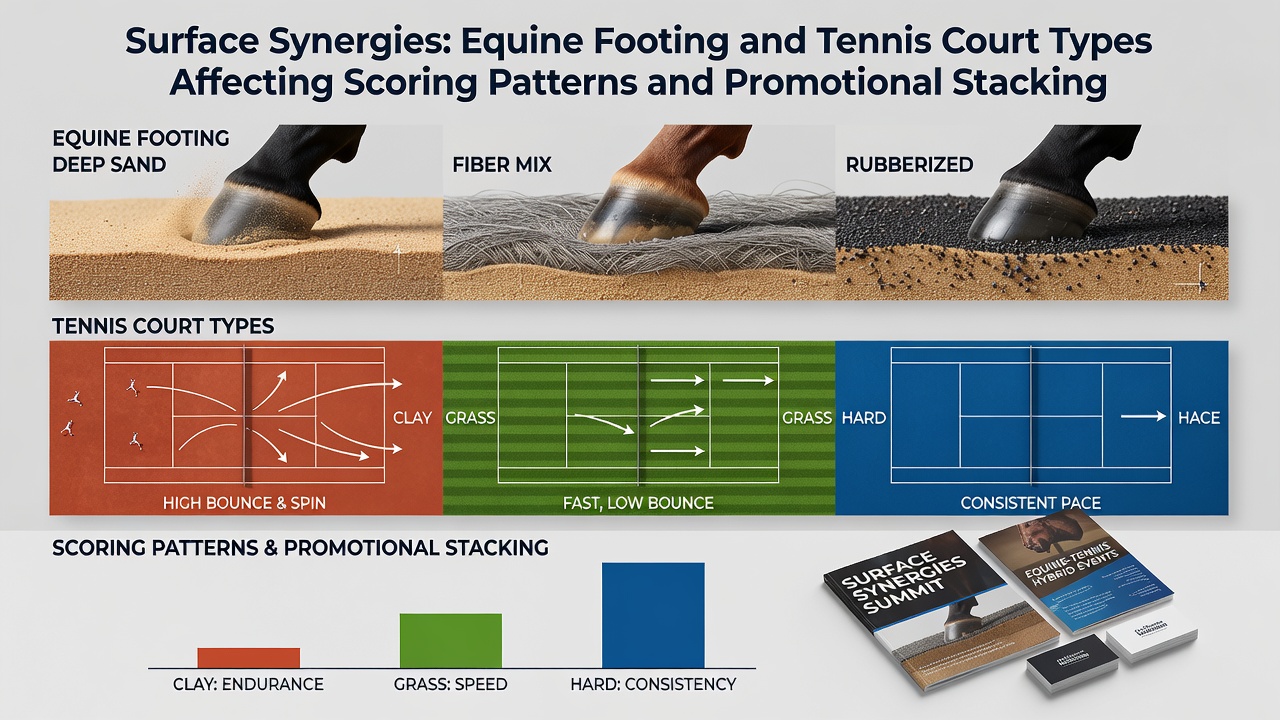
Surface Synergies: Equine Footing and Tennis Court Types Affecting Scoring Patterns and Promotional Stacking
Equine footing on racetracks consists of materials such as turf, dirt, and synthetic surfaces that determine traction, cushioning, and drainage while tennis courts feature grass, clay, and hard courts that influence ball speed, bounce height, and player movement patterns according to data compiled by sports surface researchers. These surface types create measurable effects on performance indicators in each sport, and analysts have documented how event organizers combine multiple competitions or offers to maximize attendance and engagement during specific periods like the summer circuits of August 2026.
Characteristics of Equine Footing Materials
Horse racing surfaces vary by region and climate with turf tracks common in Europe and parts of Australia where grass composition affects firmness ratings measured through penetrometer readings while dirt tracks predominate in North America and synthetic options appear at facilities seeking consistent conditions year-round. Researchers at institutions such as the University of Melbourne have measured how deeper cushioning on synthetic equine footing reduces peak impact forces on horse limbs compared with firmer dirt surfaces, leading to observable differences in stride length and finishing times across race distances. Data from multiple seasons shows that horses trained on turf often record higher win percentages when returning to similar footing, whereas transitions between surface types correlate with adjustments in average race times tracked by regulatory bodies in various countries.
Tennis Court Types and Ball Dynamics
Tennis surfaces alter rally lengths and point durations through their interaction with ball compression and friction levels, with grass courts producing lower bounces and faster speeds that favor serve-dominated play while clay courts slow the ball and increase topspin effectiveness as reported in studies by the International Tennis Federation. Hard courts deliver intermediate characteristics that balance pace and consistency across professional tournaments, and statistical reviews from the Association of Tennis Professionals indicate that ace percentages rise notably on faster grass compared with clay where longer baseline exchanges appear more frequently. Surface maintenance practices including rolling, watering, and line painting further modify these patterns throughout a tournament week.
Comparative Effects on Performance Metrics
Performance data across both sports reveals parallel responses to footing variables, since equine stride efficiency on varying track depths mirrors how tennis players adjust footwork and recovery times based on court grip levels. Studies tracking thousands of races and matches demonstrate that softer equine surfaces extend race durations by fractions of seconds per furlong while slower tennis courts extend average point times by several seconds, creating cumulative shifts in overall event pacing. Observers note that athletes and horses conditioned on specific surfaces show reduced injury markers when competition aligns with training conditions, a pattern confirmed through veterinary and sports medicine records collected over multiple seasons.
Interactions Between Surface Categories
Cross-sport analyses conducted by performance laboratories highlight how weather events such as rainfall modify both equine and tennis surfaces simultaneously during overlapping summer schedules, with wet turf slowing horse times and damp clay courts increasing skid potential for tennis balls. Equipment choices including horseshoe types and tennis shoe outsoles adapt to these changes, and data sets from event organizers show measurable impacts on total points scored or distances covered under altered conditions. These interactions become particularly relevant during periods when multiple disciplines share venue resources or promotional calendars.
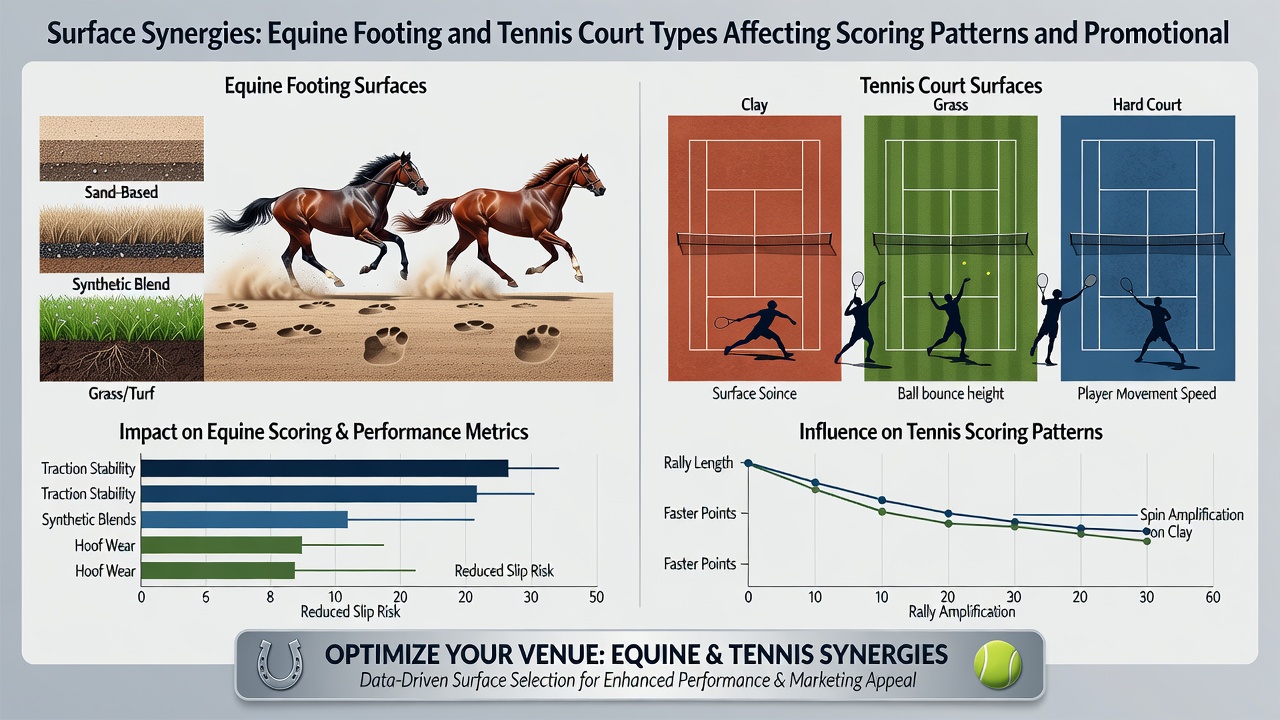
Promotional Structures Tied to Surface Conditions
Event promoters often group competitions according to surface characteristics to create stacked lineups that appeal to diverse audiences, such as combining turf-focused racing festivals with nearby hard-court tennis tournaments during the same week. Records from international sports federations indicate that attendance figures and media coverage increase when organizers align events with favorable surface conditions that produce predictable performance outcomes. Marketing materials frequently reference historical surface-specific statistics to frame upcoming matches or races, and ticket packages or broadcast schedules reflect these groupings without altering the underlying competitive rules.
August 2026 calendars illustrate continued use of this approach with major equine events on European turf circuits paired alongside North American hard-court tennis series, allowing shared logistical planning and cross-promotion among venues. Regulatory documentation from bodies including the Australian Sports Commission and the United States Anti-Doping Agency tracks compliance across these multi-surface programs while preserving separation between distinct sporting codes.
Conclusion
Surface properties in equine and tennis contexts produce distinct yet comparable influences on movement efficiency, injury profiles, and event pacing that organizers incorporate into scheduling and marketing frameworks. Continued monitoring through academic and industry research supports refined maintenance protocols and performance forecasting models applicable across both disciplines.