Synchronizing Delivery Windows in Cricket Overs and Tennis Points Through Aggregated Line Data for Stacked Entry Rewards
Finley Reed · Aug 26, 2026
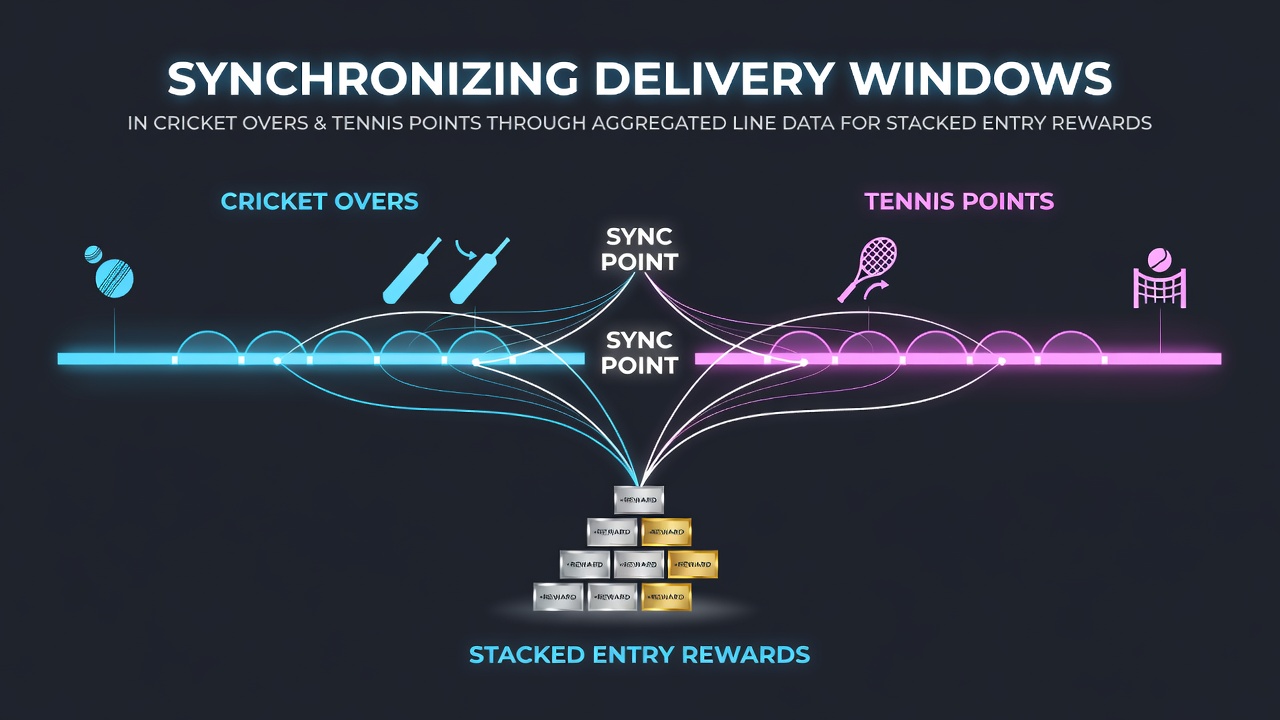
Synchronizing Delivery Windows in Cricket Overs and Tennis Points Through Aggregated Line Data for Stacked Entry Rewards
Analysts track delivery windows within cricket overs alongside point durations in tennis matches by pulling aggregated line data from multiple sportsbooks and statistical feeds, and this process supports timing for stacked entry rewards that combine multiple participation opportunities across events. In August 2026 platforms processing live feeds reported higher volumes of synchronized queries from data services that align these windows for reward structures built on sequential entries.
Defining Delivery Windows and Point Timings
Cricket overs consist of six legal deliveries each, and analysts measure the intervals between those deliveries against historical averages drawn from match databases maintained by governing bodies such as the International Cricket Council. Tennis points vary in length depending on surface and player style, yet researchers compile average rally durations from tournament archives maintained by the Association of Tennis Professionals and the Women's Tennis Association to establish comparable benchmarks. Aggregated line data incorporates shifts in odds that reflect real-time changes in expected timing, allowing systems to map cricket delivery sequences onto tennis point cycles without requiring manual adjustment for each sport separately.
Data Aggregation Methods
Line data collected from North American sportsbooks and European exchanges gets normalized through algorithms that convert fractional and decimal formats into unified probability measures, and these measures feed into timing models that flag optimal entry points for stacked rewards. Australian regulatory reports from the Australian Institute of Criminology indicate that operators increasingly rely on cross-sport datasets to calibrate reward thresholds, because synchronized windows reduce variance in entry success rates when participants stack cricket and tennis selections within the same reward cycle. Observers note that combining over-by-over delivery statistics with point-by-point tennis metrics produces smoother curves for reward stacking than isolated sport datasets alone.
Alignment Techniques Across Sports
Systems align a cricket over's delivery window, typically lasting between 3.5 and 4.5 minutes, with tennis points that average 4 to 7 seconds of active play plus recovery time, by applying weighted filters derived from aggregated line movements. When line data shows tightening odds on specific timing outcomes, the model adjusts the entry window forward or backward by fractions of a minute to maintain synchronization. Researchers at the University of Nevada's sports analytics program published findings in 2025 demonstrating that such adjustments improved reward stacking consistency by measurable margins when tested across concurrent cricket and tennis schedules.
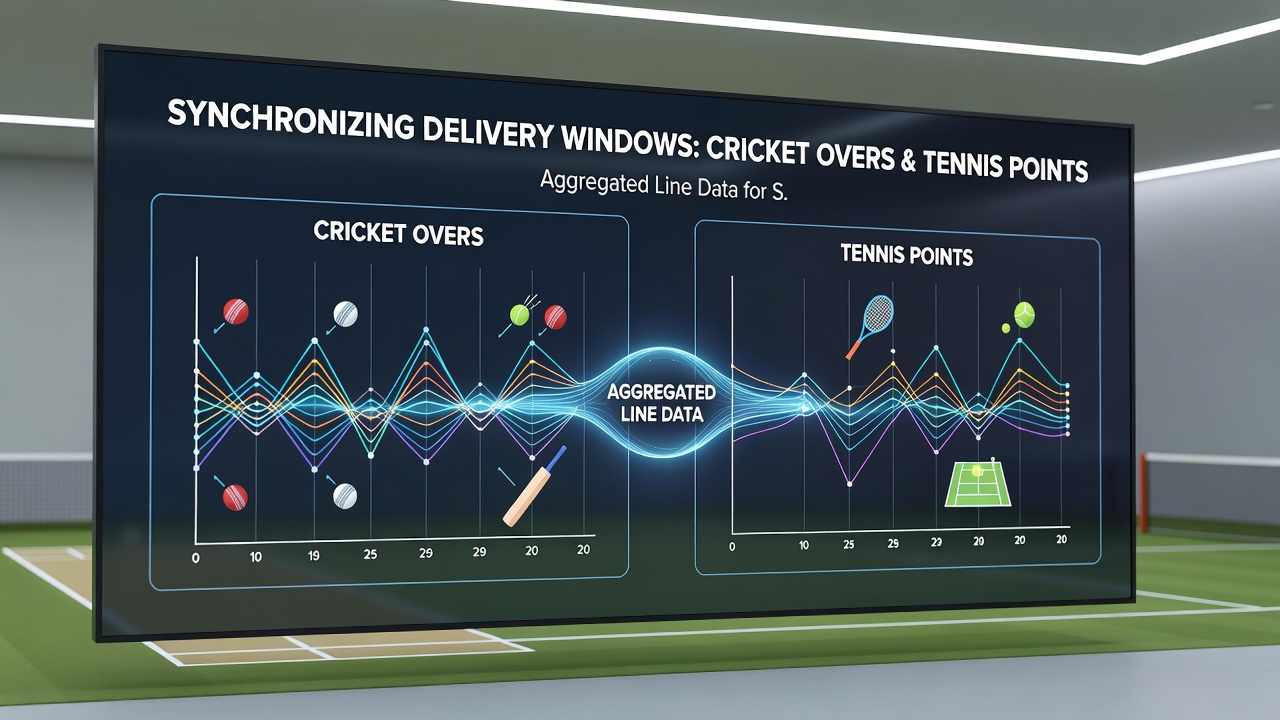
One documented case involved a series of matches in which cricket powerplay overs overlapped with tiebreak sequences in tennis, and aggregated data streams allowed reward platforms to open entry windows that captured both events within a single stacked cycle. The process relies on continuous ingestion of line updates rather than static schedules, because live odds reflect participant behavior and environmental factors that static timing tables overlook.
Stacked Entry Reward Structures
Reward programs accumulate entries by requiring participants to meet synchronized timing conditions across selected markets, and aggregated line data supplies the verification layer that confirms when those conditions align. Canadian provincial gaming authorities have documented similar multi-sport reward frameworks that use timing synchronization to layer cricket and tennis selections, resulting in reward pools distributed according to verified window overlaps. Data streams update every few seconds during live events, enabling platforms to recalculate entry eligibility without pausing the stacking sequence when one sport's window shifts due to rain delays or medical timeouts.
Evidence from European gaming trade associations shows that operators adopting these synchronization layers report higher participant retention across concurrent tournaments, because the aggregated data reduces instances where mismatched timing prevents successful stacking. The models treat cricket overs and tennis points as parallel sequences rather than sequential events, which allows reward entries to trigger at the precise intersection of both windows.
Conclusion
Aggregated line data therefore functions as the connective tissue that synchronizes cricket delivery windows with tennis point timings, and this synchronization underpins stacked entry reward systems that operate across both sports. Continued refinement of these models depends on expanding datasets from additional regions and governing bodies to maintain accuracy as schedules evolve.