Weather Impacts on Cross-League Line Movements and Multi-Event Wager Adjustments
Parker Franke · Aug 1, 2026

Weather Impacts on Cross-League Line Movements and Multi-Event Wager Adjustments
Weather patterns exert measurable effects on athletic performance and event outcomes across professional leagues, which in turn prompt adjustments in betting lines that span multiple sports and wager types. Data from meteorological agencies shows that temperature fluctuations, precipitation levels, and wind speeds alter player statistics in baseball, tennis, cricket, and horse racing, while bookmakers respond by shifting odds in real time to reflect updated probabilities. Observers note that these shifts become particularly pronounced during periods when several leagues operate simultaneously, such as the summer schedule in August 2026 when Major League Baseball games overlap with tennis tournaments and cricket test matches.
Mechanisms of Weather Influence on Individual Sports
High temperatures above 30 degrees Celsius correlate with reduced endurance in tennis matches, where serve percentages drop and error rates rise according to performance tracking compiled by tournament organizers. In baseball, humidity combined with wind direction affects ball flight, producing changes in home run totals that data analysts have quantified at an average variance of 8 to 12 percent on affected days. Cricket matches experience delayed starts or shortened overs when rain interrupts play, and studies from the Australian Bureau of Meteorology indicate that wet outfields reduce scoring rates by measurable margins in limited-overs formats. Horse racing tracks undergo surface condition changes during rainfall, with turf becoming slower and altering finishing times that directly feed into odds calculations for place and exacta markets.
Cross-League Line Movements in Simultaneous Events
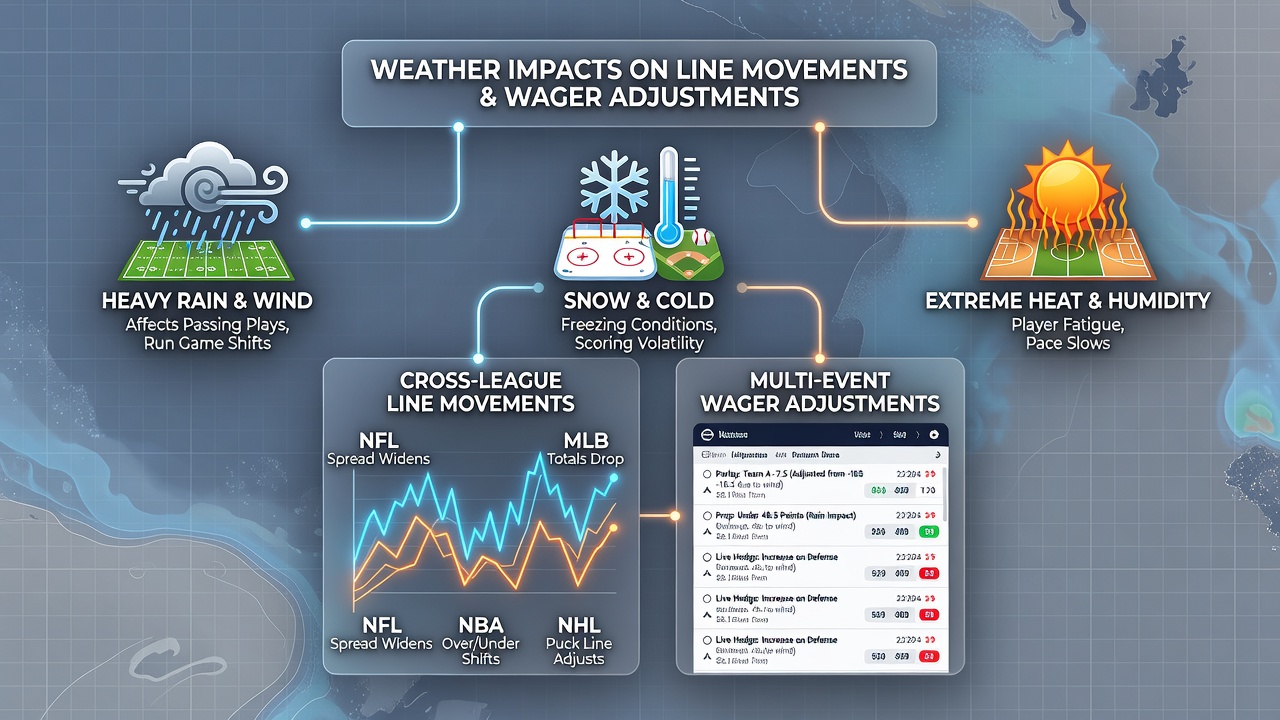
When weather systems move across regions hosting multiple sports, line movements in one league frequently influence pricing in unrelated events because multi-event accumulators tie outcomes together. A rain delay in a morning cricket session can coincide with afternoon baseball games under clear skies, prompting operators to adjust totals and player props across both markets to balance exposure. Researchers tracking August 2026 fixtures observed that wind advisories issued for coastal tennis venues produced corresponding tweaks in basketball preseason lines when bettors shifted volume toward weather-neutral sports. These adjustments occur because operators monitor aggregate handle across correlated events and recalibrate to maintain margin targets.
Adjustments in Multi-Event Wagers
Multi-event wagers require continuous monitoring because weather-induced changes in one leg cascade through the entire structure. Operators apply algorithms that incorporate real-time forecasts from sources such as the European Centre for Medium-Range Weather Forecasts to revise implied probabilities before events begin. For instance, a forecast shift predicting thunderstorms during a baseball doubleheader may trigger downward movement on run totals while simultaneously elevating odds on underdog tennis players expected to benefit from slower court conditions. Data indicates that such revisions can reach several percentage points within an hour when severe weather warnings activate, and accumulators involving three or more sports experience amplified volatility because each component carries independent meteorological risk.
Regional Variations and Seasonal Patterns
Geographic differences produce distinct patterns, with European summer heatwaves affecting football pre-season friendlies and North American hurricane seasons disrupting baseball schedules along the Gulf Coast. In August 2026, analysts documented how monsoon activity in South Asia altered cricket session timing, which then intersected with dry conditions in North American horse racing circuits and created offsetting movements in cross-continental accumulator products. Regulatory bodies in various jurisdictions require operators to disclose how external factors like weather factor into pricing models, and industry reports confirm that transparent communication reduces disputes when lines shift rapidly.
Conclusion
Weather remains a quantifiable driver of line movements that connect otherwise separate leagues through shared multi-event wagering structures. Accurate integration of meteorological data enables consistent adjustments that reflect updated event probabilities across baseball, tennis, cricket, and racing markets. Continued monitoring of these interactions during overlapping seasons provides the factual basis for understanding how environmental conditions translate into betting market dynamics.