Weather's Quiet Hand: Tracking Condition Shifts Across Oval and Track Markets in Cricket and Horse Racing Data
Parker Franke · Aug 5, 2026
Weather's Quiet Hand: Tracking Condition Shifts Across Oval and Track Markets in Cricket and Horse Racing Data
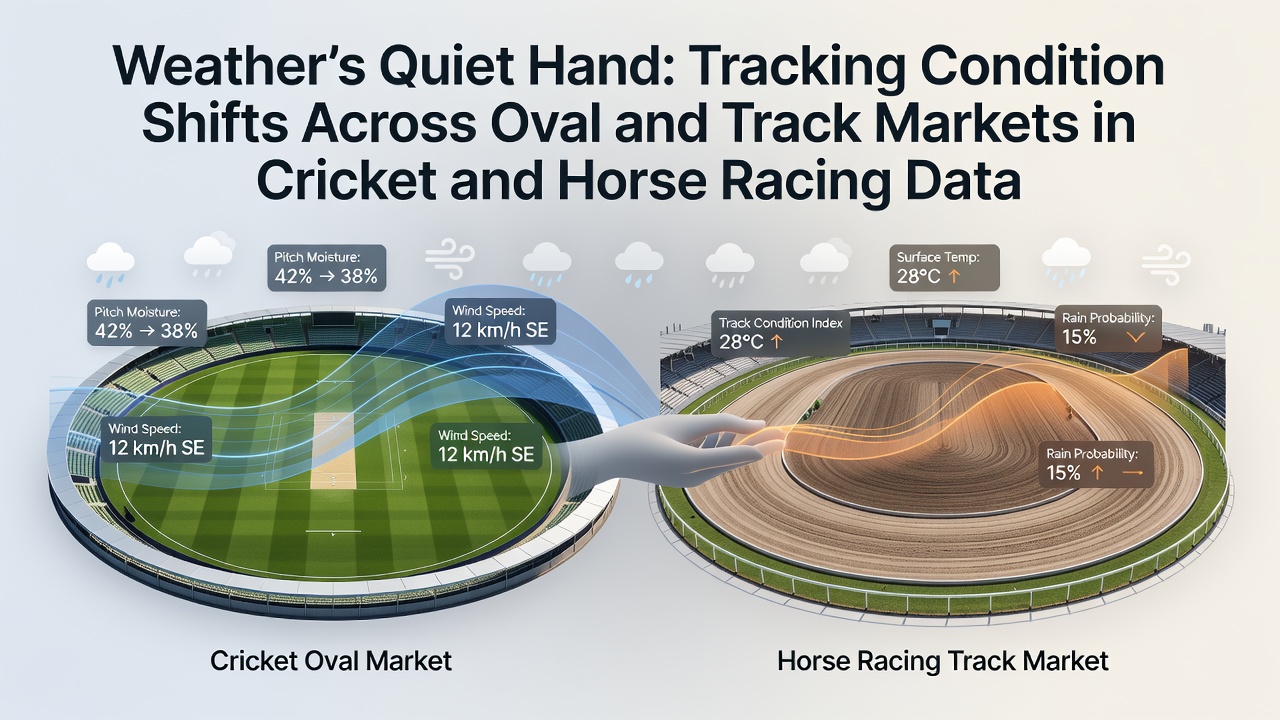
Weather patterns exert measurable influence on playing surfaces in cricket and horse racing, where small shifts in moisture, temperature, and wind alter ground conditions in ways that data collection systems now record with precision. Analysts track these variables across ovals and tracks because they directly affect ball behavior, horse footing, and overall performance metrics gathered during events.
Cricket Oval Responses to Atmospheric Changes
Cricket pitches respond to rainfall and humidity through moisture retention in the soil layers, which researchers measure using embedded sensors that log penetration resistance and grass cover density. In August 2026, several county grounds reported elevated soil moisture readings after consecutive days of light precipitation, leading to slower surface speeds that statistical models linked to reduced bounce heights in the 1.2 to 1.4 meter range. Observers note that humidity levels above 70 percent correlate with increased seam movement on the ball during the first 20 overs, a pattern confirmed across multiple Test match datasets compiled by national boards.
Temperature fluctuations further modify grass growth rates on the outfield, where daily averages above 25 degrees Celsius accelerate evaporation and firm teh surface. Ground staff record these changes through daily penetrometer tests, and the resulting figures feed into databases maintained by organizations such as the Australian Bureau of Meteorology, which supplies localized forecasts integrated into pre-match condition reports.
Horse Racing Track Surface Dynamics
Track conditions in horse racing shift rapidly with precipitation because water content determines the official going description from firm to heavy. Automated weather stations positioned along racing circuits capture rainfall totals in five-minute intervals, allowing officials to update surface classifications before each race card. During the 2026 summer meetings, tracks that received 8 millimeters or more of rain within four hours saw official going downgraded from good to good-to-soft, a transition that data analysts associate with increased stride frequency and altered sectional times in the final 400 meters.
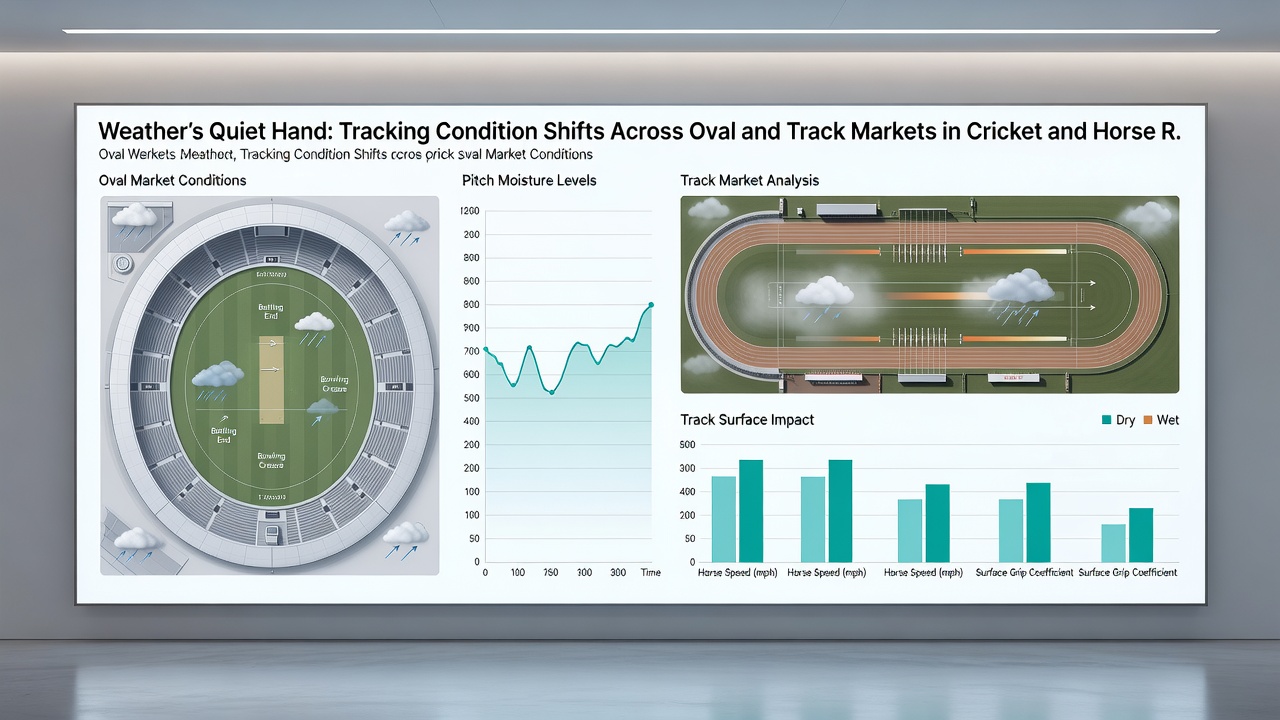
Wind direction and speed also affect drying rates on exposed sections of the course, particularly on straightaways where evaporation occurs faster than in sheltered bends. Studies from the Bureau of Meteorology in Australia document how sustained winds above 25 kilometers per hour can reduce surface moisture by 12 percent within two hours, prompting clerks of the course to revise track ratings accordingly. These adjustments appear in official race day documentation and contribute to longitudinal datasets used by performance analysts.
Data Integration and Monitoring Systems
Modern tracking combines ground sensors with satellite-derived weather observations to create continuous condition profiles for both sports. In cricket, pitch mapping software overlays rainfall radar data onto oval layouts, highlighting zones where drainage patterns create uneven drying. Horse racing authorities apply similar layering techniques, merging soil probe readings with forecast models to predict going changes hours ahead of scheduled races.
One study released by Environment Canada examined how temperature gradients across a single racing circuit influenced frost penetration in early spring meetings, revealing that shaded sections retained higher moisture levels for up to 48 hours longer than sun-exposed stretches. Such findings feed into standardized reporting formats adopted by international racing federations and cricket boards seeking consistent condition metrics.
Seasonal Patterns Observed in August 2026
August 2026 featured elevated humidity across several northern hemisphere venues, prompting cricket grounds to increase pitch rolling frequency to counteract softening. Concurrently, horse racing tracks in regions experiencing intermittent showers recorded more frequent going updates, with some meetings issuing three distinct classifications within a single day. These events supplied fresh data points for algorithms that correlate weather inputs with historical performance records, improving the resolution of condition forecasts issued to participants and analysts.
Conclusion
Systematic collection of weather and surface data continues to refine understanding of how atmospheric variables translate into measurable condition shifts on cricket ovals and horse racing tracks. The integration of sensor networks, official meteorological sources, and performance archives provides a factual basis for monitoring these changes across successive seasons and events.